


How Does Medium Temperature Affect Chemical Pump Selection?
How does medium temperature affect chemical pump selection?
1.Pump Construction
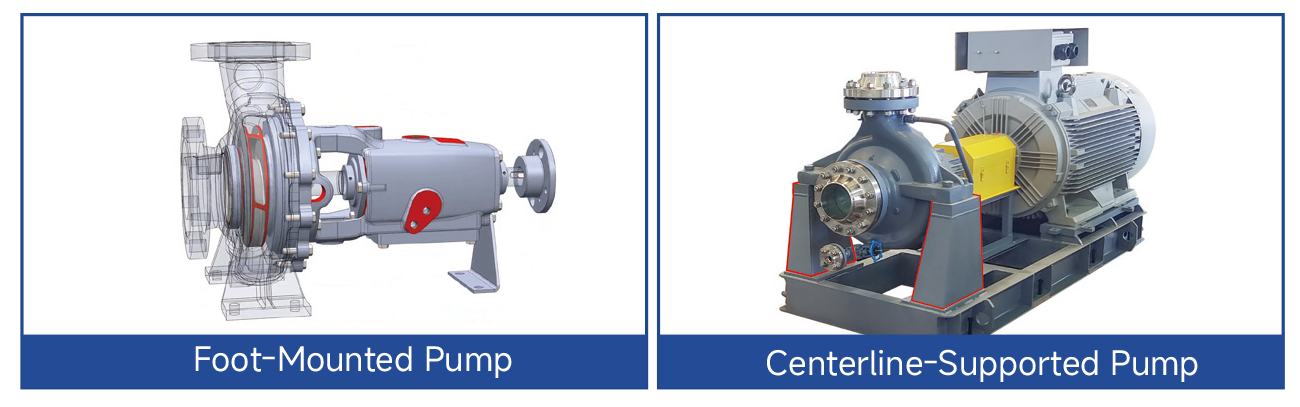
-20°C to +150°C: Foot-mounted pumps (e.g., OH1, BB1) are commonly used. In this design, the pump feet expand and contract together with the casing due to thermal expansion, which may affect shaft alignment. However, within this temperature range, the impact is generally controllable.
Below -20°C or above 150°C: Centerline-supported pump constructions (e.g., OH2 and BB2) are generally recommended. In this design, the pump casing is supported by independent centerline supports, allowing thermal expansion and contraction of the casing without affecting the support structure, thereby maintaining shaft alignment.
2. Mechanical Seal Configuration
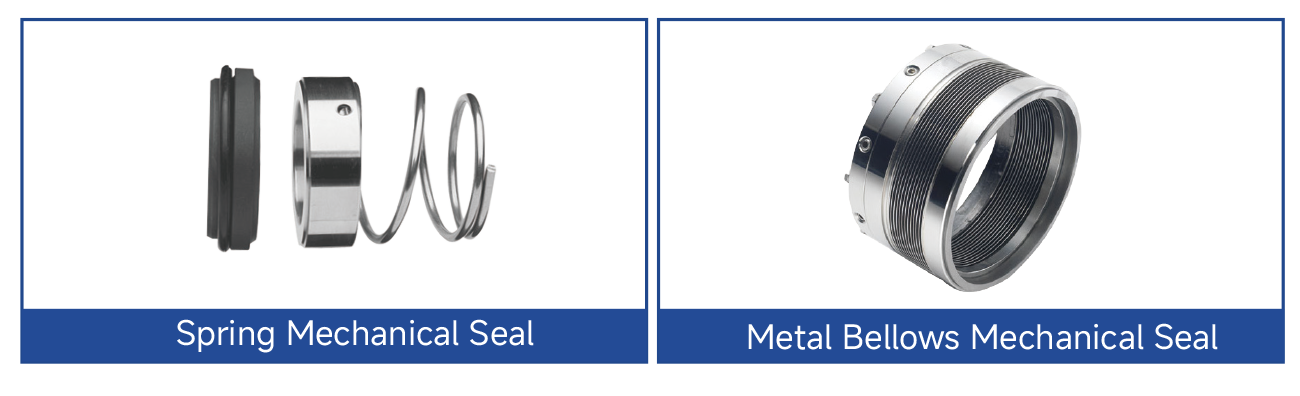
Below 176°C: Spring mechanical seals are typically suitable.
Above 176°C: Metal bellows mechanical seals are generally preferred for better thermal stability.
3. Cooling Arrangement
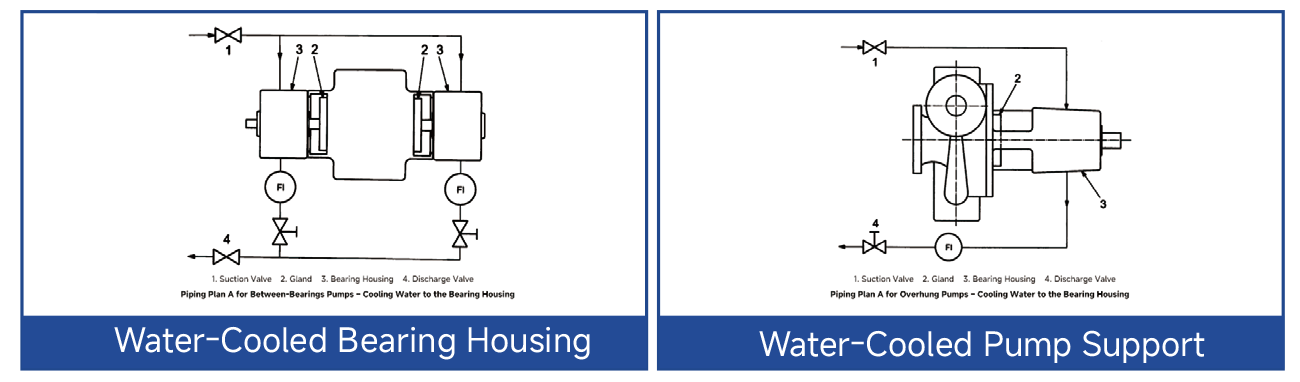
Above 120°C: Water cooled bearing housing is often recommended, especially for multistage centrifugal pumps.
Above 250°C: Water cooled pump support may also be considered to further reduce heat transfer.
4. Material Selection
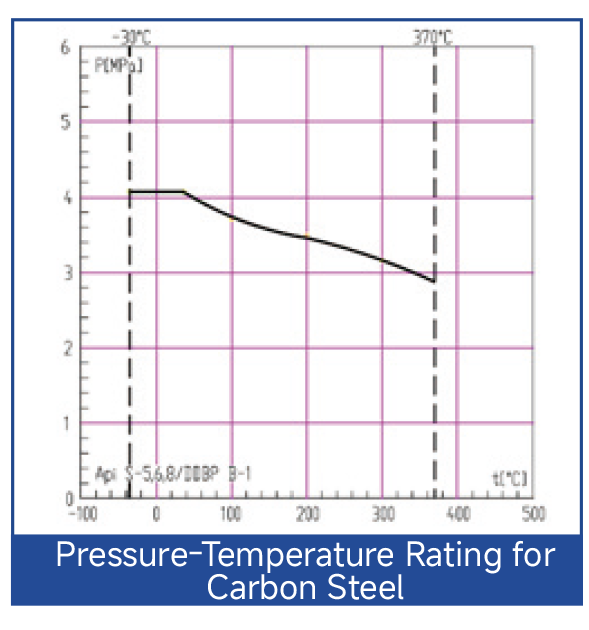
As temperature increases, the pressure-retaining capability of metallic materials decreases. Therefore, the pump casing should always be verified against the pressure-temperature rating of the selected material to ensure sufficient pressure containment under actual operating conditions.
At the same time, the corrosiveness of many process fluids increases with temperature. For example:
Concentrated sulfuric acid at ambient temperature can typically use carbon steel or 904L stainless steel.
At elevated temperatures, more corrosion-resistant materials such as Hastelloy or Alloy 20 may be required.
5. Fluid Properties
Temperature changes the density, viscosity, and vapor pressure of the process fluid, all of which directly affect pump performance.For instance, water density decreases as temperature rises. Pump selection calculations should therefore always be based on the actual operating conditions rather than standard reference conditions.
-
-
-
-
 2025-12-23
 -

Free Technical Consultation
Visit Our Factory to Witness Micron-Level Manufacturing






Schedule a Visit to Volm Factory
Witness micron-level processing centers and ISO 9906 Class-1 testing center up close

Customize for You
Help customers save 30% costs on average
Reduce failure rates by 40% on average